From Energy Scarcity to Systems Change: Why Richard Kidd Gives to RMI
How one donor’s experience shaped his belief in RMI’s impact
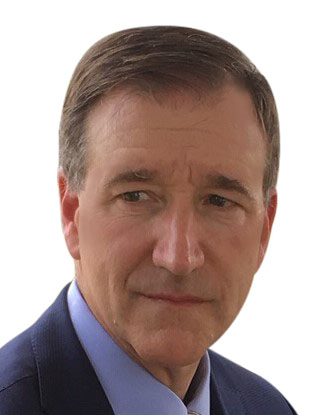 Richard Kidd has seen what happens when energy runs out.
As an emergency logistics officer with the United Nations, Kidd was responsible for ensuring the flow of food, fuel, and water in some of the world’s most fragile environments. In refugee camps, energy isn’t abstract — it’s life or death.
“The refugee camp is the ultimate energy poverty environment,” he says. “If you run out of diesel to run the generators, you turn off the generators that clean the water, and people start to die of waterborne disease. You turn off the generators that provide power to the medical clinics, and you no longer have cold chains to keep medicines effective. Or you turn off the power that provides the lighting and the security, then you have violence.”
That experience shaped how Kidd understands energy: not only as infrastructure, but also as the foundation for human dignity, safety, and survival.
That perspective influenced his approach to driving efficiencies in last-mile logistics, and led him to RMI.
In the early 2000s, Kidd was invited to participate in an RMI design charrette exploring what a net-zero refugee camp might look like — an ambitious idea that brought together thinkers from across disciplines.
“I was brought into the charrette as the refugee camp guy,” he recalls. “I met Amory and the entire Rocky Mountain team. It was really enriching and exciting.” Richard then went on to collaborate with Amory and RMI on Winning the Oil End Game. He also briefed RMI’s board on energy and environmental security.
What stood out for Kidd during these early collaborations wasn’t just the people, but the way they approached problems.
“Two principles I learned from RMI that cascaded through everything were whole-systems integrated design and the idea of ‘making the problem bigger.’ Because then you have more solutions.”
At first, that idea can sound counterintuitive. But in practice, it means stepping back from a narrow technical question to understand the real need behind it. Instead of asking, “How do I heat my house?” you ask, “How do I keep people warm?” That shift opens up entirely different solutions — like better insulation, smarter building design, or passive heating — that can reduce or even eliminate the need for a furnace altogether.
It’s a way of moving from what RMI cofounder Amory Lovins calls the “hard path” to the “soft path.” The hard path focuses on producing more energy — bigger power plants, more fuel, and more supply. The soft path starts by reducing demand through efficiency and smarter design, often solving the problem before new energy is needed.
By expanding the frame, challenges that once seemed intractable become flexible, and new, often simpler solutions come into view.
Those ideas would stay with Kidd as his career evolved.
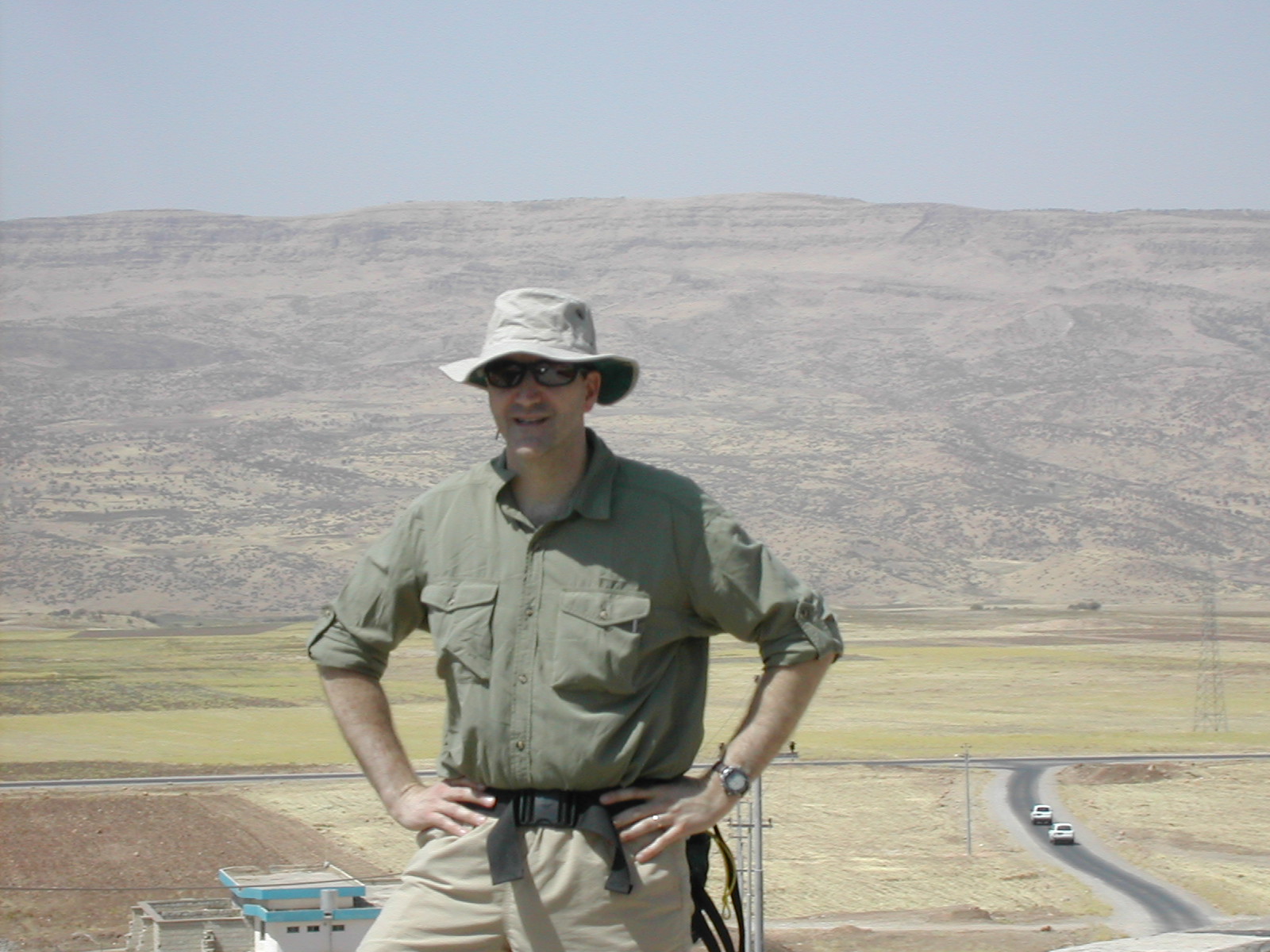
Kidd went from the UN to the US government, where he spent over 16 years leading public-sector sustainability projects at the Department of Energy, the Army, and later, the Department of Defense.
Initially, he led the Federal Energy Management Program at the US Department of Energy, helping federal agencies meet their sustainability goals through improved building performance, energy efficiency, and renewable energy deployment.
Later, he brought that same systems-thinking approach to the US Army, where he served as Deputy Assistant Secretary for Energy and Sustainability. There, he helped drive significant reductions in energy use, including cutting petroleum consumption in the Army’s vehicle fleet by more than 40% in just a few years.
“Enabling fuel savings required looking at more than just vehicle efficiency. It required examining rule sets and patterns of use,” Kidd says. “In the federal government, the higher the individual’s rank, the larger the vehicle. We changed this and allotted vehicles based on use-cases, matching form to function.”
While with the Army, Kidd implemented what was then the federal government’s comprehensive High Performance Sustainability Design Guide — a set of standards designed to ensure federal facilities are energy-efficient, environmentally friendly, and cost-effective — resulting in the largest portfolio of LEED-certified buildings in the nation. He also led efforts that resulted in the largest pipeline of energy savings performance contracts in the federal government and the deployment of over 700 megawatts of renewable energy systems.
Kidd then served as the deputy assistant secretary of defense for environmental and energy resilience, where he and his team guided policies associated with a $13 billion energy bill and authored the Department of Defense’s climate adaptation and mitigation plans.
Today, Kidd continues to apply that systems-thinking approach as a strategic advisor on energy innovation, decarbonization, and climate resilience. He works with a wide range of clients — from consulting firms and investors to utilities, research institutions, and emerging technology companies — helping them identify solutions that are both commercially viable and socially beneficial.
And he traces this kind of impact back, in part, to the way RMI shaped his thinking.
It’s why he believes the organization’s influence can’t be measured by projects alone.
“RMI’s impact goes far beyond what shows up in an annual report,” he says. “It’s in the people they’ve influenced — people who’ve had some interaction with RMI and then are inspired and go do other things.”
Over time, that ripple effect adds up.
“I would suspect RMI’s cumulative impact… is much higher than the sum of all their annual reports.”
Today, Kidd continues to support RMI as a Solutions Council donor — part of a deliberate giving strategy focused on both humanitarian and environmental work. He sees his contributions not just as charitable, but also as a way to sustain the ideas and insights that have shaped his own work, and a way to help others do the same.
“Every little bit counts,” he says. “This is a collective problem that we collectively have created as a society, and we collectively have to address it.”
For those considering their first gift, his message is simple:
“Everyone has an opportunity to be part of the solution… and if you really want to make a difference, RMI is one of the best places to do it.”